 Free shipping on orders over £50. Shop now!
 4.3★ from 3K+ clients who love our products
 Delivery in 2-4 working days
 Free returns within 100 days
Travel safely with your newborn
Bringing your newborn home is the start of an exciting new chapter, and every journey deserves the very best protection. Whether you're travelling home from the hospital, visiting loved ones, or heading out for your baby's first adventure, choosing the right car seat and using it correctly helps keep your little one safe and comfortable. With a little preparation before you set off, you can travel with confidence, knowing your newborn is secure from the very first ride.
Choosing the right baby car seat
Your newborn should always travel in a rear-facing baby car seat that is suitable from birth and appropriate for their height and weight. Rear-facing seats provide the best support for a baby's developing head, neck, and spine and are designed to help protect them in the event of a collision. When choosing a car seat, make sure it meets the latest safety standards and is compatible with your vehicle. You can browse our range of baby car seats here.
Before every journey
Before every trip, take a moment to check that your newborn's car seat is correctly installed and that your baby is securely fastened in the harness. The harness should fit snugly, lying flat without twists, and the headrest should be adjusted so it supports your baby's head comfortably. Avoid dressing your baby in bulky coats or thick clothing, as these can prevent the harness from fitting properly. Instead, secure the harness first and place a blanket over your baby if extra warmth is needed. It's also worth checking that any loose items in the car are safely stored away before you set off.
Planning longer journeys
If you're travelling a longer distance, it's a good idea to plan regular breaks. General guidance recommends that babies should not remain in a baby car seat for more than around two hours at a time, as a lie-flat position is best for newborns. Read our article for tips for longer journeys with your newborn.
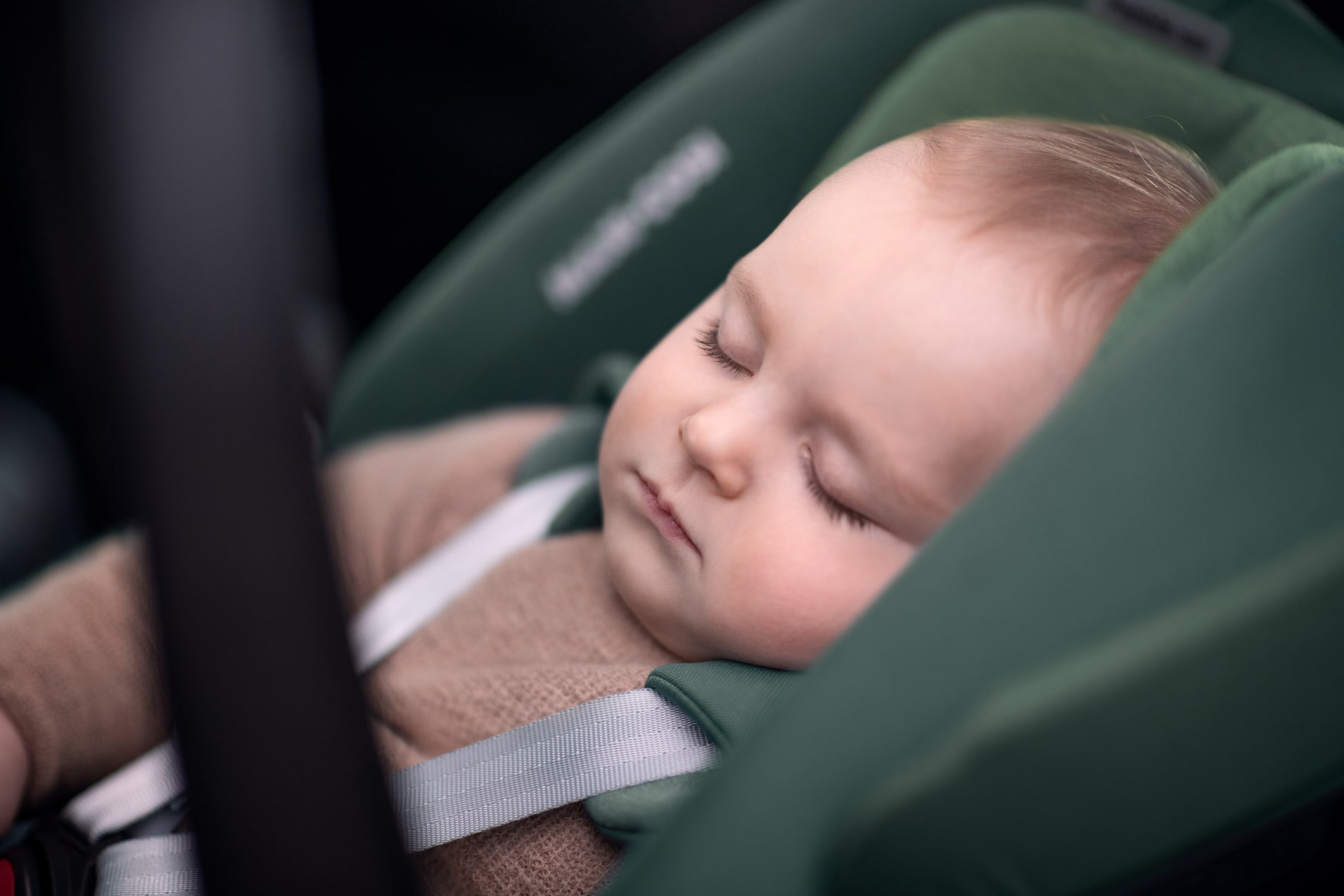
Watch our video on how to install a baby car seat with the seat belt
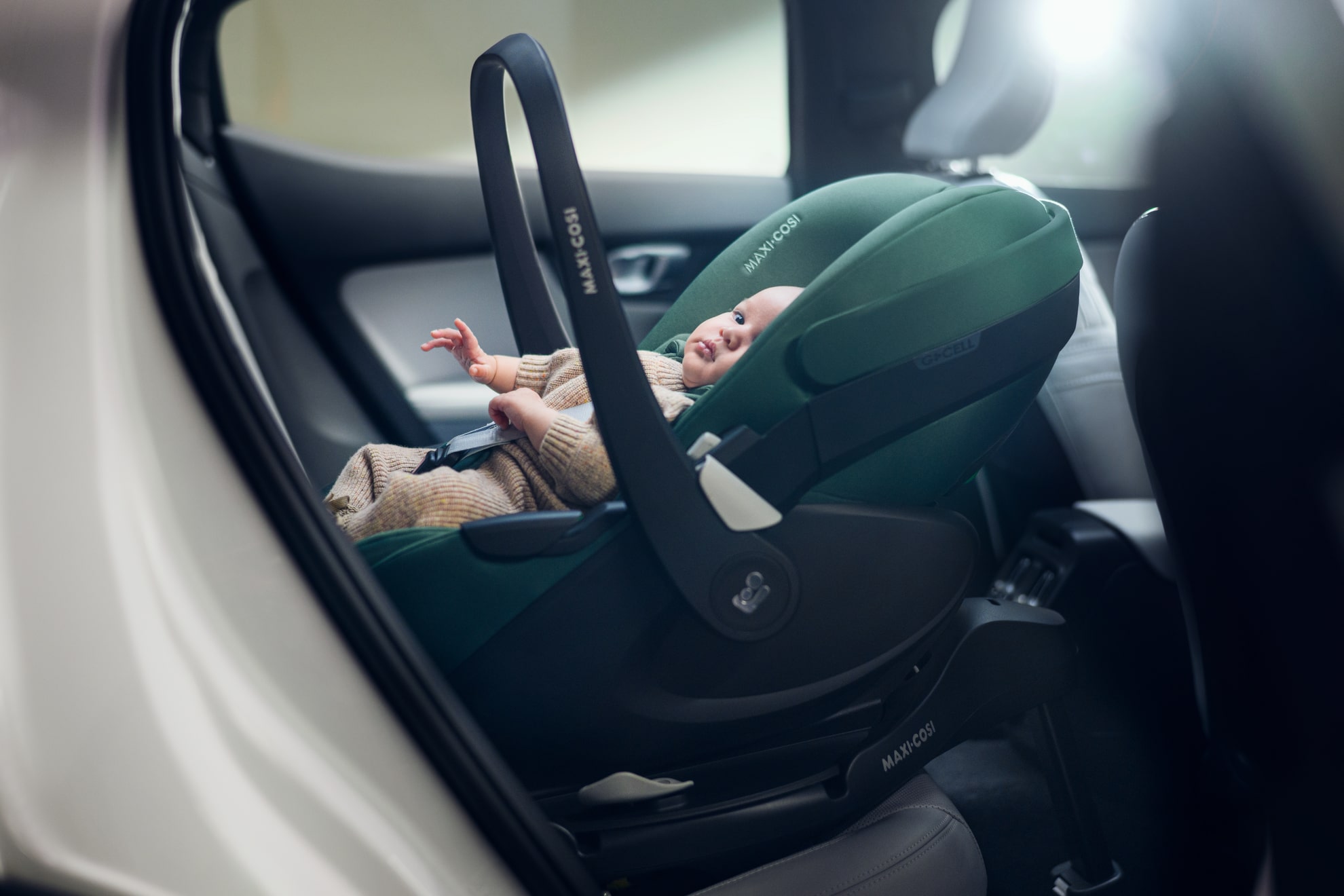
Watch our video on how to install a baby car seat with an Isofix base
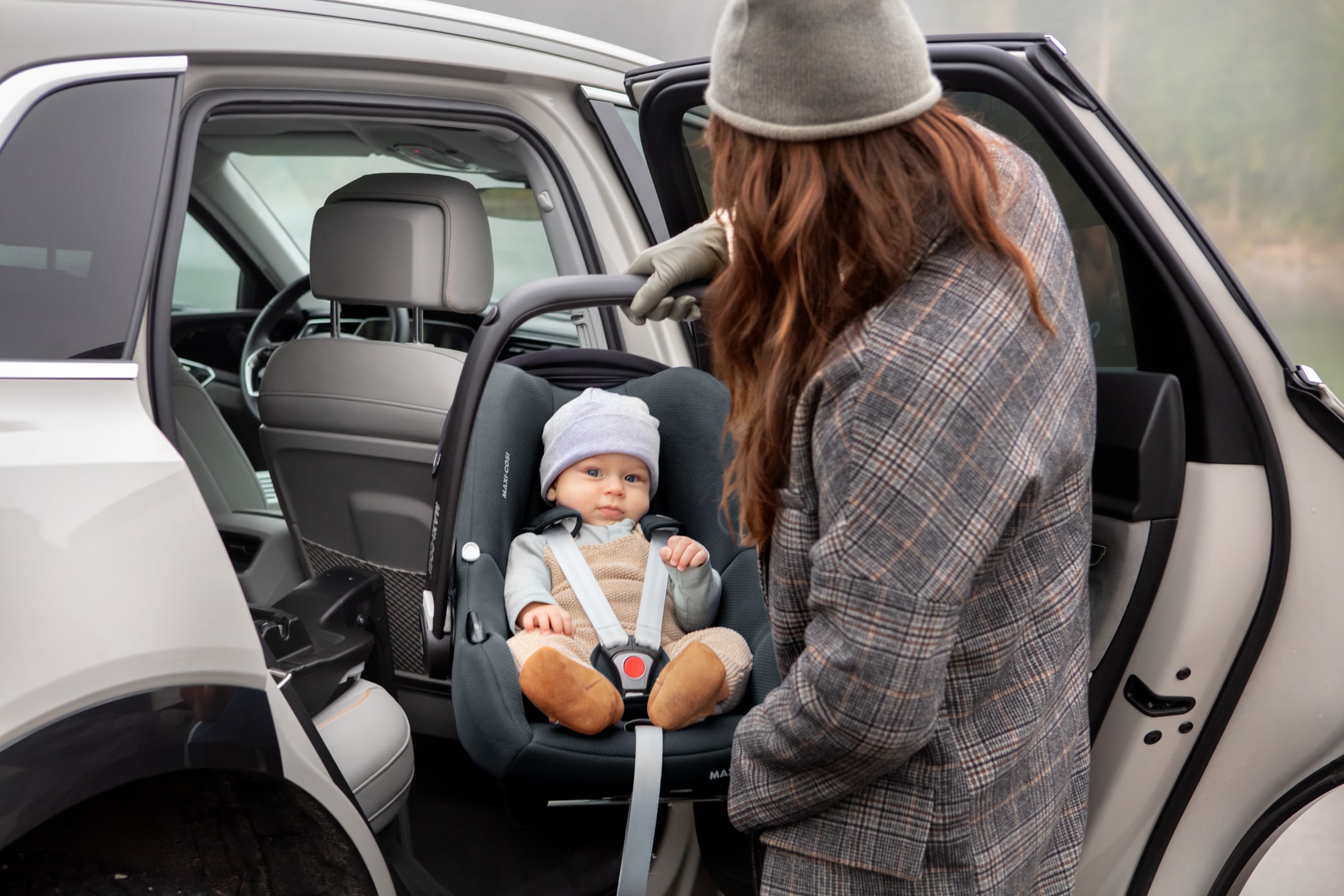
Watch our video on how to fasten your baby in car seat
FAQs
When can my newborn travel in a car seat?
Your newborn can travel in a suitable rear-facing baby car seat from their very first journey home. Make sure the seat is appropriate for your baby's height and weight, is installed correctly, and that the harness fits snugly before every trip.
How long can a newborn stay in a car seat?
For longer journeys, it's recommended that babies are not left in a car seat for more than around two hours at a time. Plan regular breaks so your baby can be taken out of the seat for feeding, changing, and a chance to stretch before continuing your journey.
Should my newborn always travel rear-facing?
Yes. Rear-facing is the safest way for newborns and young children to travel, as it provides the best support for their head, neck, and spine in the event of a collision. Keep your child rear-facing for as long as your car seat allows.
Can my newborn wear a winter coat in their car seat?
It's best to avoid bulky coats or thick clothing when your baby is in a car seat, as they can prevent the harness from fitting correctly. Dress your baby in thinner layers, fasten the harness securely, and place a blanket over the harness if extra warmth is needed.
How do I know if the harness fits correctly?
The harness should lie flat against your baby's body without any twists and be snug enough that you can't pinch excess webbing at the shoulders. The headrest and harness should also be adjusted as your baby grows to ensure the best fit.
How do I choose the right newborn car seat?
Choose a rear-facing car seat that is suitable from birth and matches your baby's height and weight. It should also be compatible with your vehicle and meet the latest safety standards.