 Free shipping on orders over £50. Shop now!
 Delivery in 2-4 working days
 Free returns within 100 days
 4.3★ from 3K+ clients who love our products

PPSU vs Glass: Which Baby Bottle Material Is Best?
Good question! PPSU and glass are built to solve slightly different practical problems, so the better material for you comes down to weight, durability, how you sterilise, how much you travel, and simple personal preference. This isn't a case of one being safer than the other, both are made to feed babies safely. It's about which suits your routine.
This guide compares PPSU and glass side by side, helping you understand the benefits of each so you can choose the material that best fits your feeding routine.
What is PPSU?
PPSU (polyphenylsulfone) is a premium, BPA-free material used for the bottle body. In a Maxi-Cosi bottle, PPSU is lightweight, highly durable and heat resistant enough to withstand repeated sterilisation. It has a naturally warm, amber tone, which is a characteristic of the material rather than a sign of discolouration.
In practical terms, PPSU gives you much of the toughness you'd want from a bottle you're using and sterilising several times a day, in something light enough for one-handed night feeds.
What glass baby bottles offer
Glass has a naturally non-porous surface, so it doesn't hold onto smells or flavours between feeds and stays clear over time.
The trade-offs are weight and care. Glass is heavier in the hand, which is worth thinking about for long feeds or once your baby holds their own bottle, and it can chip or crack if knocked, so it needs a quick check for damage before use. For many parents at home, those are easy trade-offs for the material's purity and easy inspection.
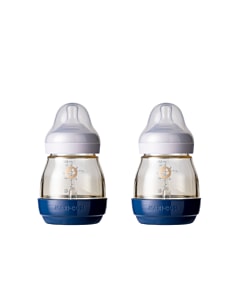
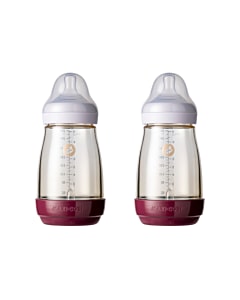
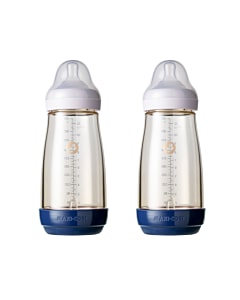
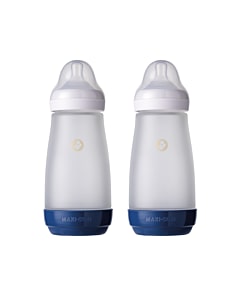
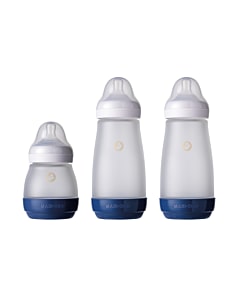
Compare the Maxi-Cosi PPSU and Glass ranges

Which material suits your routine?
Rather than asking which is better in the abstract, picture where and how you feed. A few scenarios that tend to point one way or the other:
- At home, where weight matters less, glass and its easy-clean qualities can shine
- For frequent travel and outings, PPSU's lighter weight and knockabout durability make life simpler
- For night feeds, half-asleep and one-handed, a lighter PPSU bottle you're not worried about dropping has clear appeal
- For daycare or handing bottles around, lightweight and hard to break is often the practical winner
- If storage space or the reassurance of visible wear matters to you, factor that in too
Both are valid choices, and plenty of families keep some of each, using glass at home and PPSU on the move.
Frequently asked questions
Is PPSU the same as ordinary plastic?
No. PPSU is a premium, BPA-free material chosen for its strength and heat resistance, and it holds up to repeated sterilising far better than standard bottle plastics. It's worth checking any bottle's specific material rather than treating all plastics as equal.
Are glass baby bottles practical for travel?
They can be, but their weight and the need to protect them from knocks make PPSU the easier choice for most trips and outings. Some families keep glass for home and a lighter bottle for travelling, which covers both.
Can PPSU and glass baby bottles use the same teats?
Within the Maxi-Cosi range, yes, the teats are shared across the glass and PPSU bottles, so you can move between them without changing your teats. Always check the confirmed compatibility guidance for your specific bottle.
If you'd like help weighing up features beyond material, our What to Look for in a Baby Bottle checklist walks through the full picture, and our How to Sterilise and Clean Baby Bottles guide covers caring for whichever you choose.